

Quick answer
Manta Point is accessible daily from 06:00 to 19:00, with the optimal arrival window between 06:00 and 09:30 to avoid peak boat traffic and capitalize on calmer morning conditions. All snorkelers pay a 100,000 IDR Marine Protected Area permit per person per day. The site lies on Nusa Penida's southern coast, exposed to Indian Ocean swells, so sea conditions deteriorate significantly after mid-morning during the southeast monsoon season.
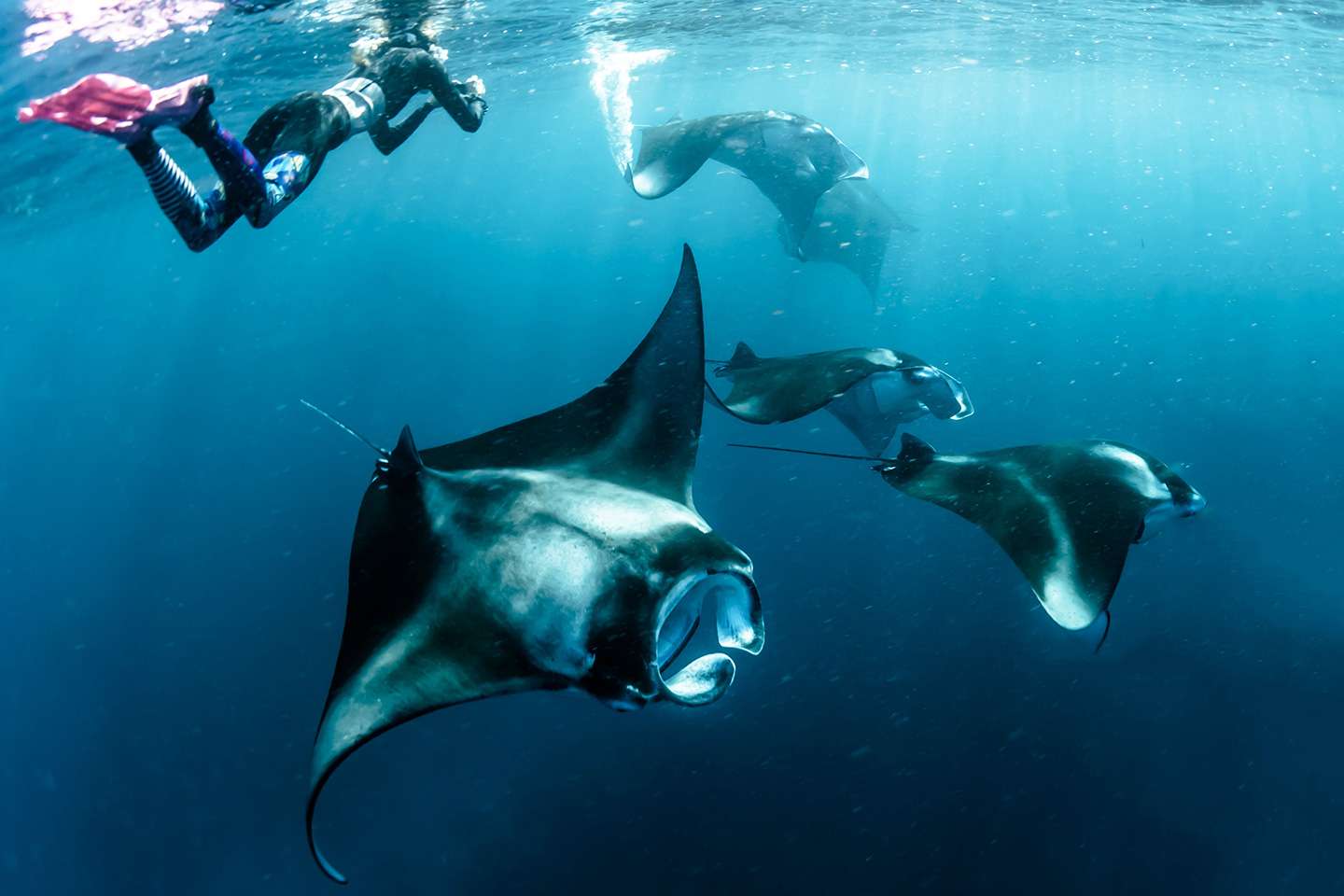
Oceanic manta rays use Manta Point as a cleaning station, hovering in predictable currents while smaller fish remove parasites from their gills and skin. The behavior concentrates mantas in a small area, making encounters reliable but also drawing heavy boat traffic during Bali's high season. Most operators anchor in a corridor just offshore from the southern cliffs, where the reef shelf drops into open water and plankton density peaks. The Marine Protected Area designation covering this stretch of coast means every snorkeler pays an entrance fee collected at the harbor or directly by patrol boats at the site. The fee funds ranger patrols and mooring buoy maintenance, infrastructure designed to reduce anchor damage to the reef. Boats tie to fixed buoys rather than dropping anchors, a system that works when captains arrive early and claim a mooring before the mid-morning rush. Current strength varies with tide and swell direction. Spring tides and southerly swells amplify water movement, conditions that favor manta feeding behavior but challenge weaker swimmers. Guides brief snorkelers on hand signals and proximity rules before entering the water. Indonesian regulations prohibit touching mantas or blocking their swim path, enforced by roving ranger boats that issue fines for violations. Most encounters happen in three to eight meters of water, shallow enough for clear visibility but deep enough that standing on the reef is neither possible nor permitted. The site's reputation has made it one of the most visited nusa penida snorkeling spots, a status that brings conservation funding but also stress to the manta population during peak months. Researchers monitoring the cleaning station have identified individual mantas by unique ventral markings, tracking site fidelity and behavioral changes as tourism pressure increases. Morning departures remain the most reliable strategy for combining strong manta activity with manageable crowd levels, a balance that defines the Manta Point experience for most snorkelers visiting Penida's underwater sites.
“Oceanic manta rays use Manta Point as a cleaning station, hovering in predictable currents while smaller fish remove parasites from their gills and skin.”
The Best Arrival Window for Nusa Penida Snorkeling Spots
The best arrival window for Manta Point is 06:00–09:30. Arriving within this timeframe helps avoid peak crowds and allows visitors to experience calmer morning seas.
Dry Season (Apr–Oct)
Moderate to high27°C–30°C, low rainfall
Drier conditions provide more consistent visibility for underwater viewing.
Wet Season (Nov–Mar)
Lower to moderate26°C–29°C, higher rainfall
Expect occasional rain, though manta ray sightings remain consistent throughout the year.
Weekday mornings
Low crowd density—
Early arrival ensures quieter conditions and easier access to the water before boat traffic increases.
Verdict: The concrete best slot for snorkeling is weekdays between 06:00 and 09:30 during the dry season months of April or October.
Weekly Operating Hours for Nusa Penida Snorkeling Spots
Manta Point snorkeling activities are available daily throughout the week. The site maintains consistent operating hours to accommodate visitors.
| Monday | 06:00–19:00 | |
|---|---|---|
| Tuesday | 06:00–19:00 | |
| Wednesday | 06:00–19:00 | |
| Thursday | 06:00–19:00 | |
| Friday | 06:00–19:00 | |
| Saturday | 06:00–19:00 | |
| Sunday | 06:00–19:00 |
How to Access Manta Point and Other Nusa Penida Snorkeling Spots
Manta Point is located along the Southern Coast of Nusa Penida. Access is exclusively via boat departing from local harbors such as Toyapakeh or Sampalan.
Departure from Toyapakeh or Sampalan Harbor
Travel to harbor departure points
Local transport to harbor areas
Essential Tips for Visiting Nusa Penida Snorkeling Spots
Navigating the open waters of Manta Point requires specific preparation to ensure both visitor safety and marine conservation.
Maintain passive observation
Keep at least three meters of distance from manta rays to avoid disrupting their natural cleaning behavior. Do not attempt to touch or chase them, as this causes the animals to abandon the cleaning station.
Use high-visibility gear
Wear a brightly colored rash guard or snorkel vest so your boat captain can easily track your position in the open ocean. This is critical in areas with heavy currents and surface chop.
Manage current fatigue
If caught in a strong current, swim diagonally toward the shore or boat rather than fighting directly against the flow. Always stay within sight of your designated guide or entry point.
Check equipment fit
Ensure your mask strap is tight and your snorkel has a splash guard to handle frequent surface waves. Test your gear on the boat deck before entering the water to prevent equipment failure mid-swim.
Prioritize reef-safe protection
Apply sunscreen at least 20 minutes before entering the water to prevent chemicals from washing off and damaging the delicate marine ecosystem. Avoid products containing oxybenzone or octinoxate.
Pre-Visit Checklist for Nusa Penida Snorkeling Spots
Prepare these essentials before heading to Manta Point to ensure a smooth snorkeling experience.
-
Book your snorkeling tour in advance — Tours fill quickly during peak season and guarantee boat access to Manta Point.
-
Bring reef-safe sunscreen (SPF 50+) — Standard sunscreen damages coral; biodegradable formulas protect marine ecosystems.
-
Pack an underwater camera or GoPro — Manta rays pass within arm's reach, creating rare photo opportunities.
-
Carry cash for the marine permit — The 100,000 IDR entrance fee is collected on-site and card payments aren't accepted.
-
Wear a rashguard or wetsuit — Protects against sun exposure and jellyfish during longer snorkeling sessions.
-
Bring motion sickness medication if needed — Boat rides to Manta Point can be choppy, especially outside morning hours.
-
Confirm departure time with your operator — Most tours leave between 06:00–09:30 to catch calmer seas and manta activity.
Check availability
Frequently asked questions about nusa penida snorkeling spots
Everything you need to know about nusa penida snorkeling spots