2 hr
Nusa Penida Snorkeling & West Coast Adventure
- Entry ticket
- Mobile voucher
- Valid same day
- Free cancellation
Diving Manta Point Nusa Penida — Scuba & Snorkel Adventures
Descend to reef mantas in crystal water, glide beside giants where currents meet limestone walls
Compare fares, pick the fit — all bookings are mobile-voucher and eligible for free cancellation where shown.
2 hr
6 hr
9 hr
Choosing the right experience for diving manta point nusa penida depends on whether you seek an immersive underwater exploration or a surface-level observation. These diving manta point nusa penida tours offer distinct access levels to help you decide how to engage with the marine life at this iconic cleaning station.
| Snorkeling Tour Standard Exploration |
Top pick Scuba Diving Tour Certified & Discovery |
|
|---|---|---|
| Access Method | Boat entry with surface observation | Boat entry with underwater cleaning station access |
| Depth | Surface level up to 2 meters | Up to 10-12 meters at cleaning station |
| Best For | First-time visitors and swimmers | Certified divers and skill-building beginners |
| Included | Mask, snorkel, fins, life jacket | Full scuba gear, tanks, weights, guide |
| Constraint | Requires basic swimming ability | PADI certification or discovery trial required |
| Wait Time | Depends on boat rotation | Depends on boat rotation |
| See tickets & prices |
Verdict: Opt for the scuba diving manta point nusa penida tickets if you are comfortable with open-water depths and want to experience the cleaning station from the seabed.
Worth it for certified divers seeking pelagic encounters
Diving manta point nusa penida delivers one of Bali's most reliable encounters with oceanic manta rays, justifying the 100,000 IDR marine permit and boat tour investment. Unlike coastal snorkeling sites, the dive site descends to 10–30 meters where mantas visit cleaning stations year-round, offering prolonged underwater observation impossible from the surface. Certified divers gain extended bottom time to watch mantas glide overhead while reef fish perform cleaning rituals — a dynamic absent in snorkel-only experiences. Tour packages combining Manta Point with drift dives at Crystal Bay or Gamat Bay typically run 850,000–1,200,000 IDR, covering two tank dives, equipment, and boat transfers. The site's strong currents and depth profile make scuba the only way to position yourself at manta cleaning stations rather than watching from above. For advanced divers comfortable in current and willing to invest in a full-day boat charter, diving manta point nusa penida tours offer encounters that snorkeling cannot replicate.
Bottom line: Certified divers seeking sustained pelagic interaction will find the investment worthwhile, but snorkelers gain most of the spectacle at lower cost.
Diving manta point nusa penida tours offer a deeper interaction with marine life, while snorkeling provides a more accessible, surface-level encounter; choosing depends on your certification level and comfort in the water.
|
Top pick Scuba Diving |
Snorkeling | |
|---|---|---|
| Core activity | Scuba underwater observation | Surface floating observation |
| Prerequisite | PADI or equivalent certification | No certification required |
| Equipment | Regulator and tank provided | Mask, snorkel, fins |
| Depth | 10–20 meters | Surface level |
| Interaction | Closer to ocean floor | Distanced from surface |
| Marine protected area fee | 100,000 IDR per person | 100,000 IDR per person |
| Suitability | Experienced divers | All skill levels |
| See tickets & prices |
Verdict: Securing diving manta point nusa penida tickets is ideal for certified divers seeking time with manta rays, whereas snorkeling remains the preferred option for groups wanting a casual diving manta point nusa penida tour.
Hand-picked experiences loved by thousands of travelers
3 hours
Free Cancellation
Swim with manta rays and explore dramatic coastal landmarks on this flexible island expedition
9 hours
Free Cancellation
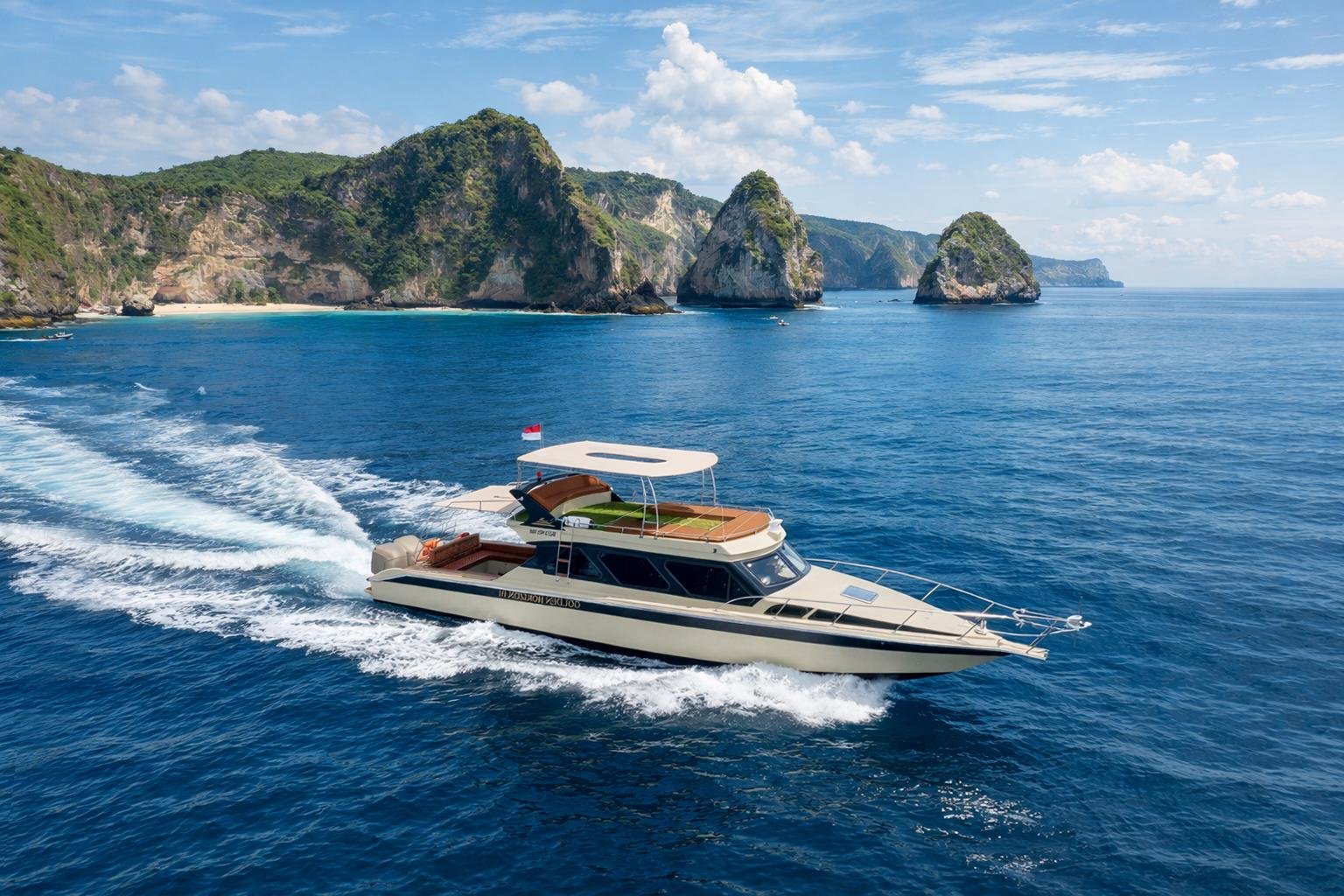
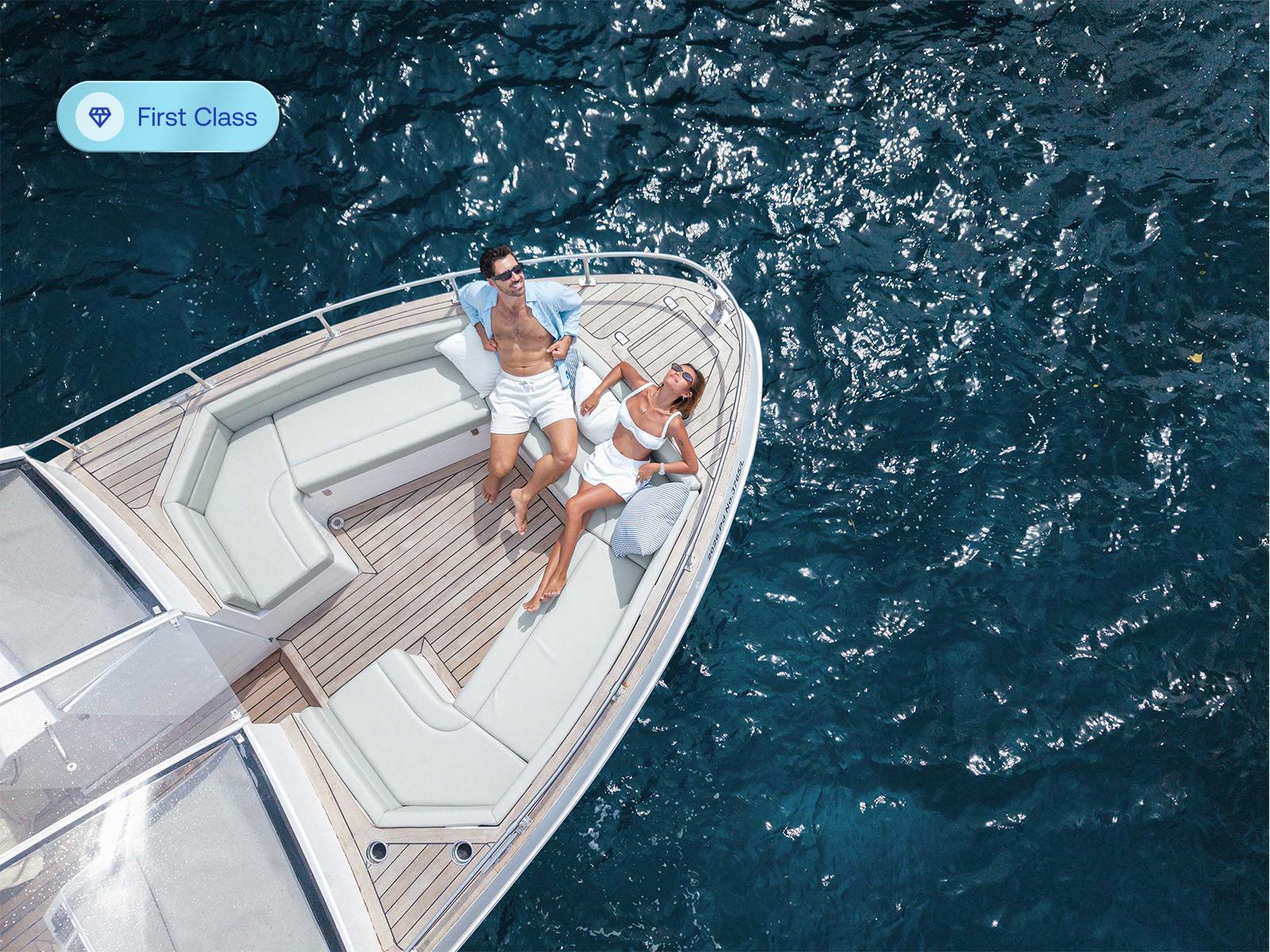
Sail to Nusa Penida aboard a 2026-built yacht, snorkel with manta rays, and visit Kelingking viewpoint
8.5 - 10 hours
Free Cancellation
Full-day private yacht journey to Nusa Penida with manta ray snorkeling, multiple dive sites, and Kelingking Cliff visit
3 hours
Free Cancellation
Swim with giant manta rays, explore three snorkel sites, enjoy Indonesian lunch, and kayak through mangroves
8.5 - 9 hours
Free Cancellation
Snorkel with manta rays, explore vibrant reefs, and choose between iconic cliffs or natural coastal wonders
3 hours
Free Cancellation
Swim with manta rays, explore pristine snorkel sites, and visit the famous Kelingking Beach cliffs
5 hours
Free Cancellation
Swim with majestic manta rays and explore vibrant coral reefs on this guided underwater expedition
8 hours
Free Cancellation
Full-day scuba adventure exploring three premier dive sites around Nusa Penida with certified guides
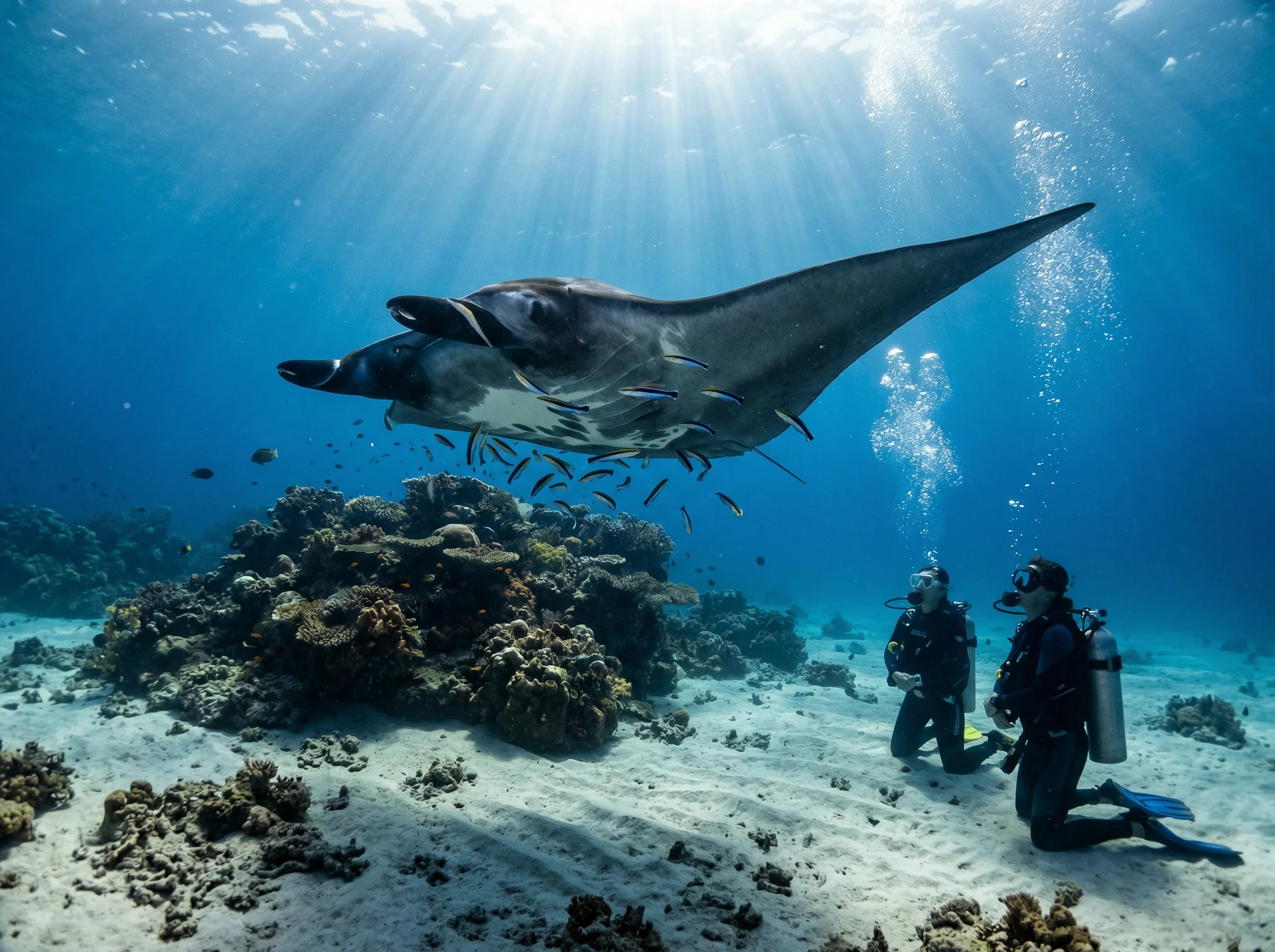
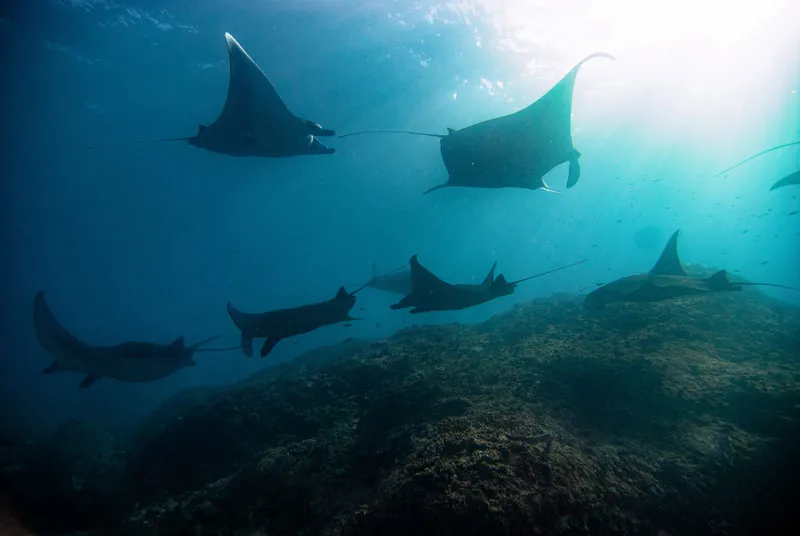
Manta rays frequently visit these rocky outcrops to have parasites removed by reef fish
Southern Limestone Reef
Open Ocean Swell
Resident Ray Population
Diverse Marine Life
You board before sunrise at Toyapakeh or Sampalan, the dive boat cutting south past limestone cliffs still grey in dawn light. Thirty minutes later the captain drops anchor at Manta Point's mooring buoy, and you gear up while the dive guide briefs currents and hand signals.
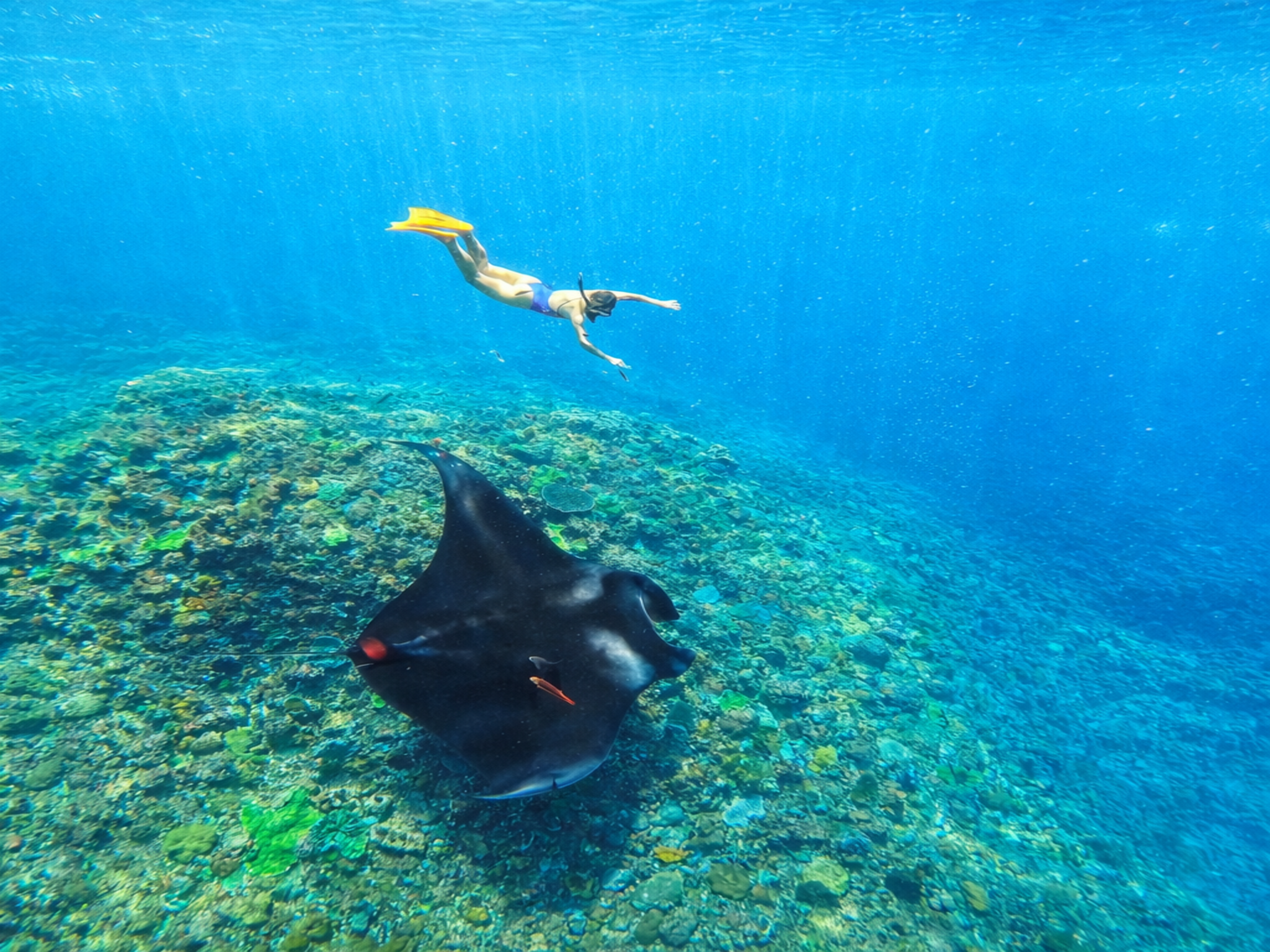
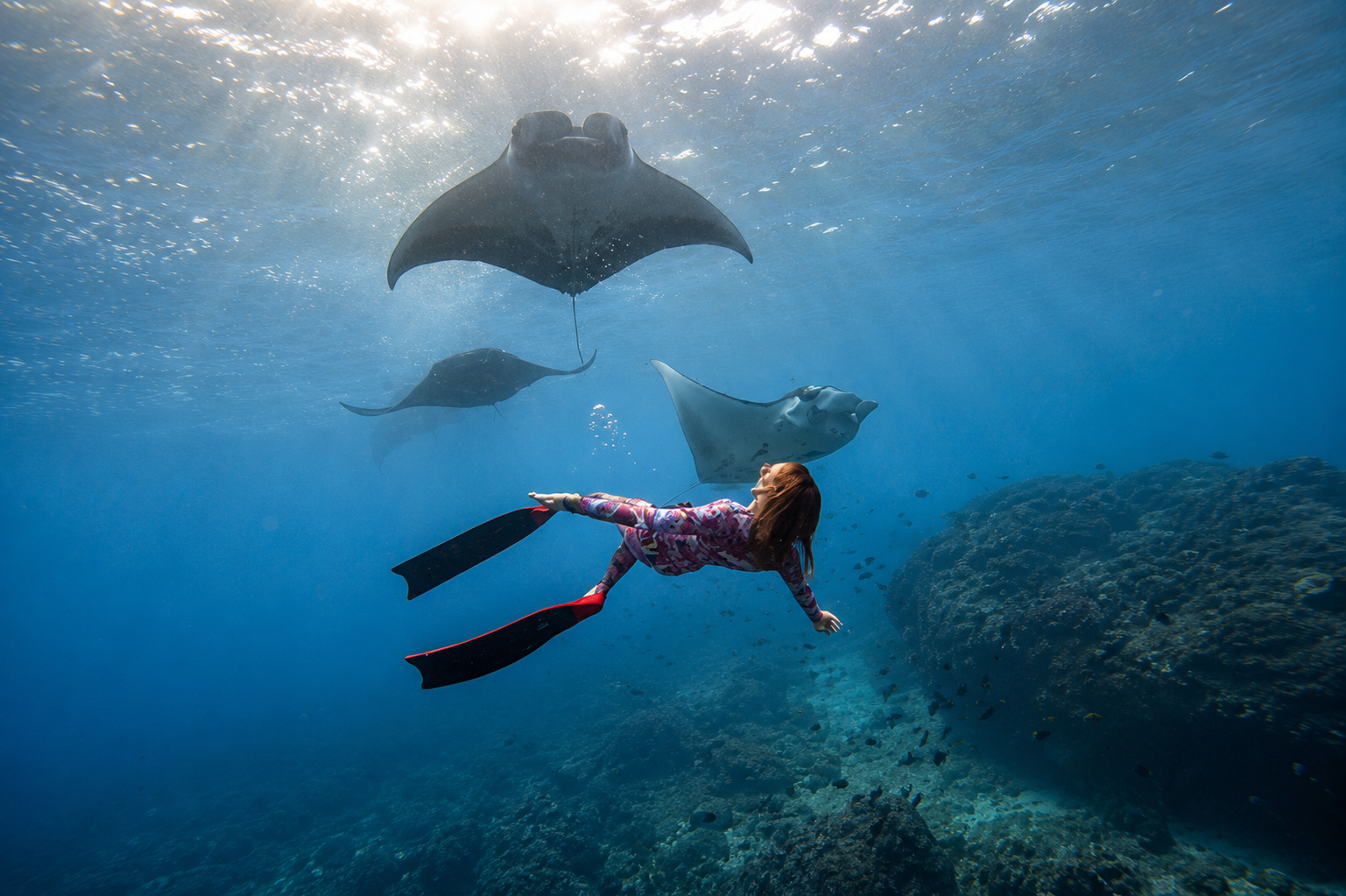
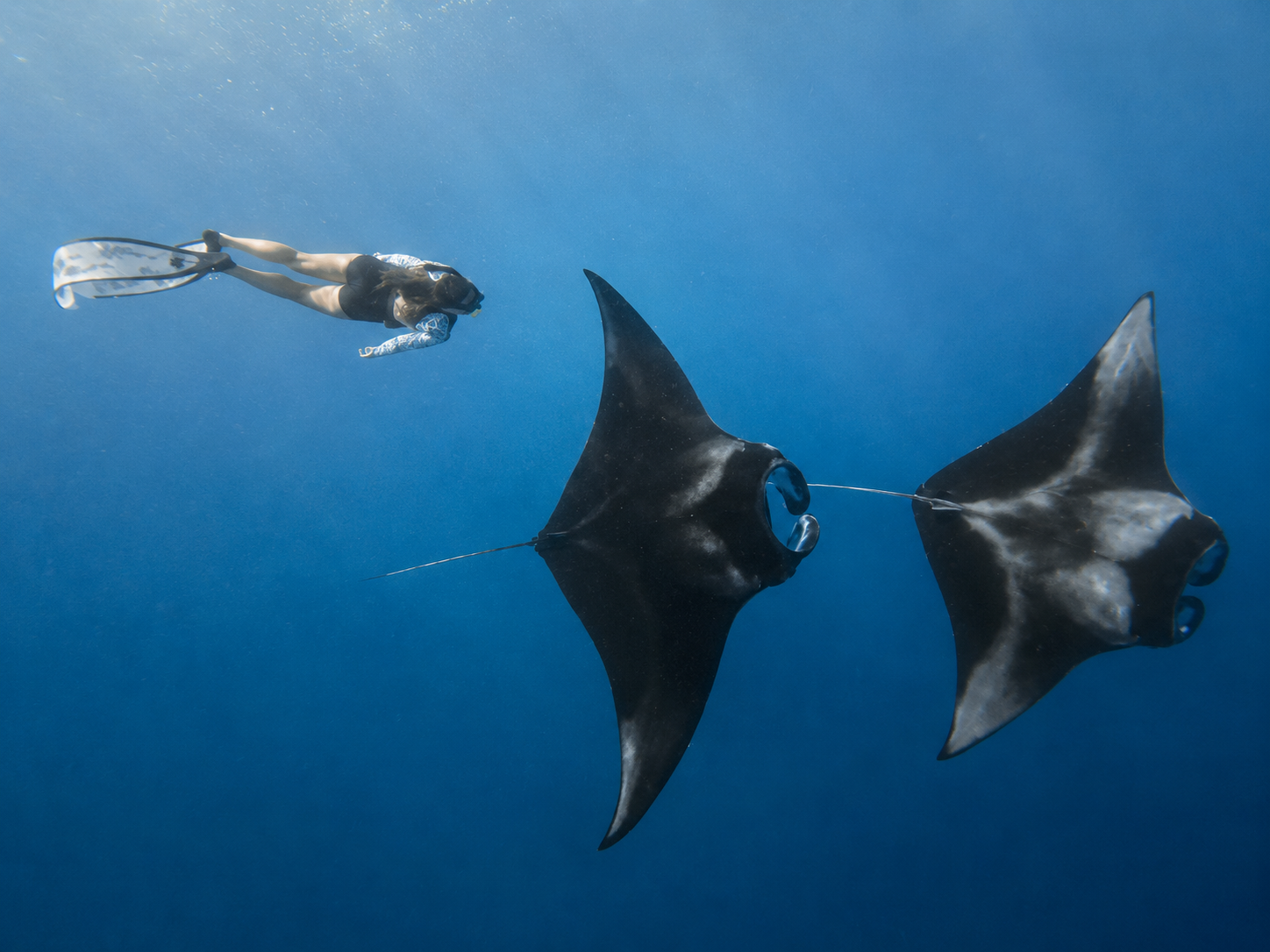
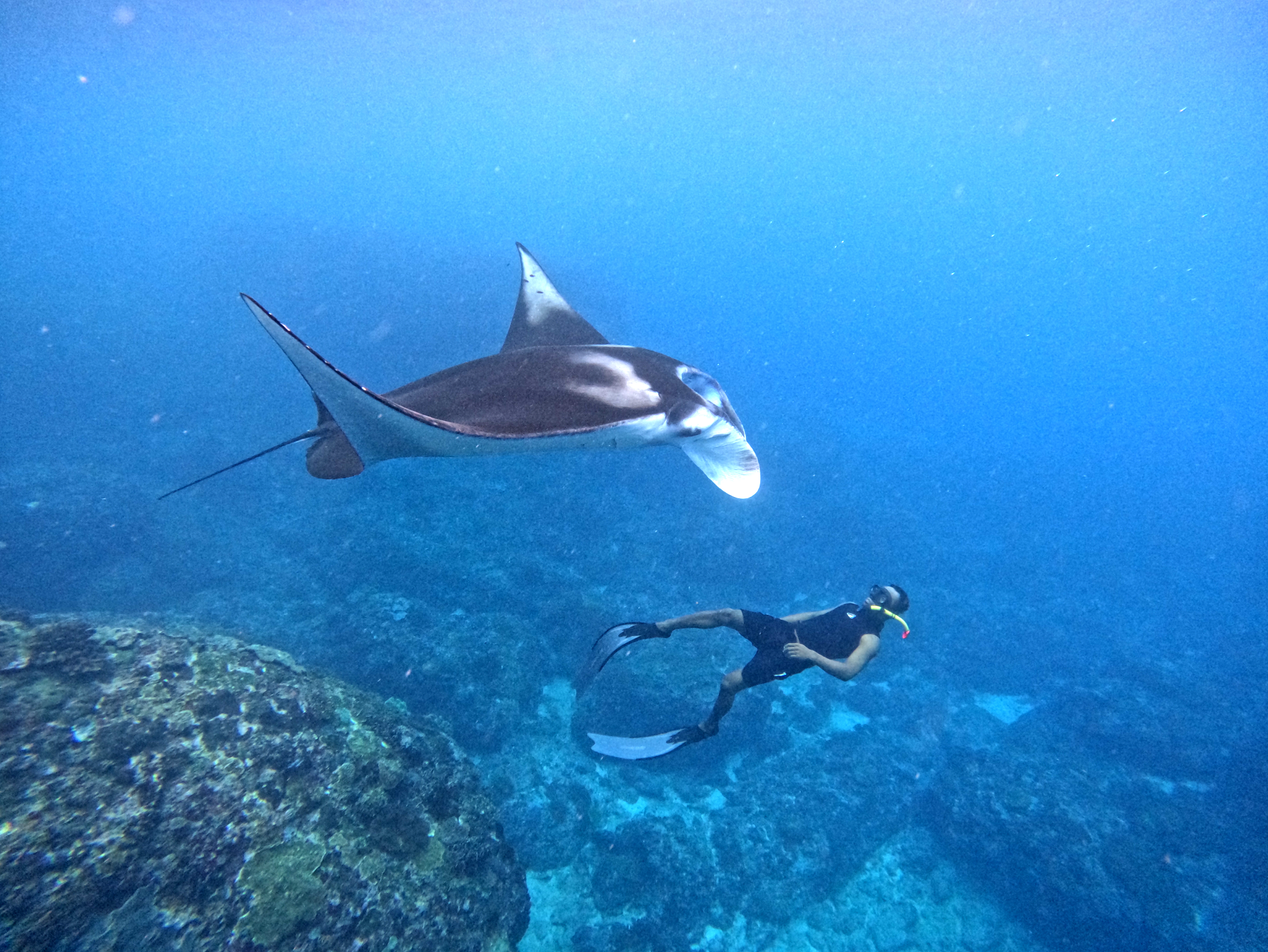
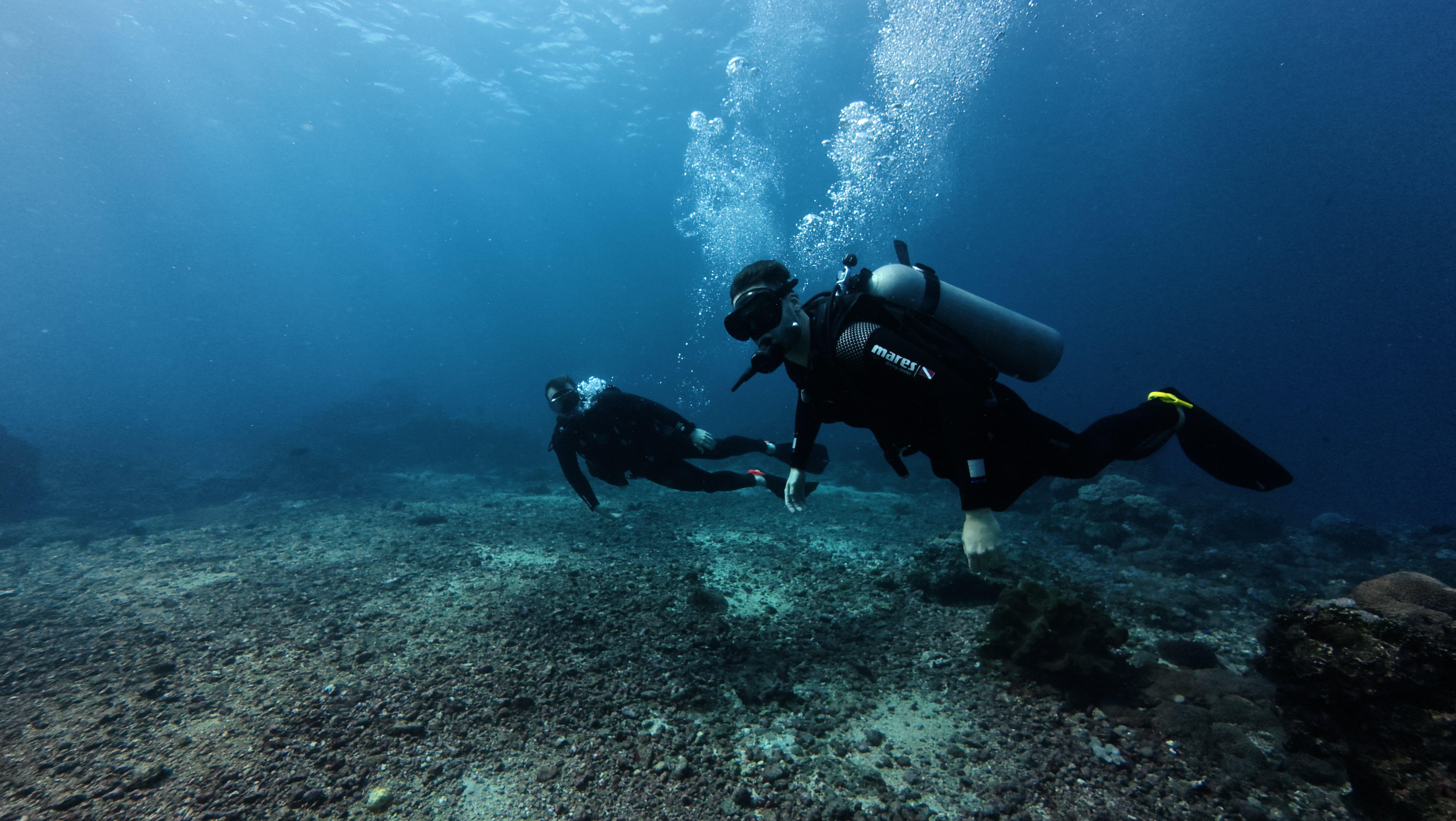
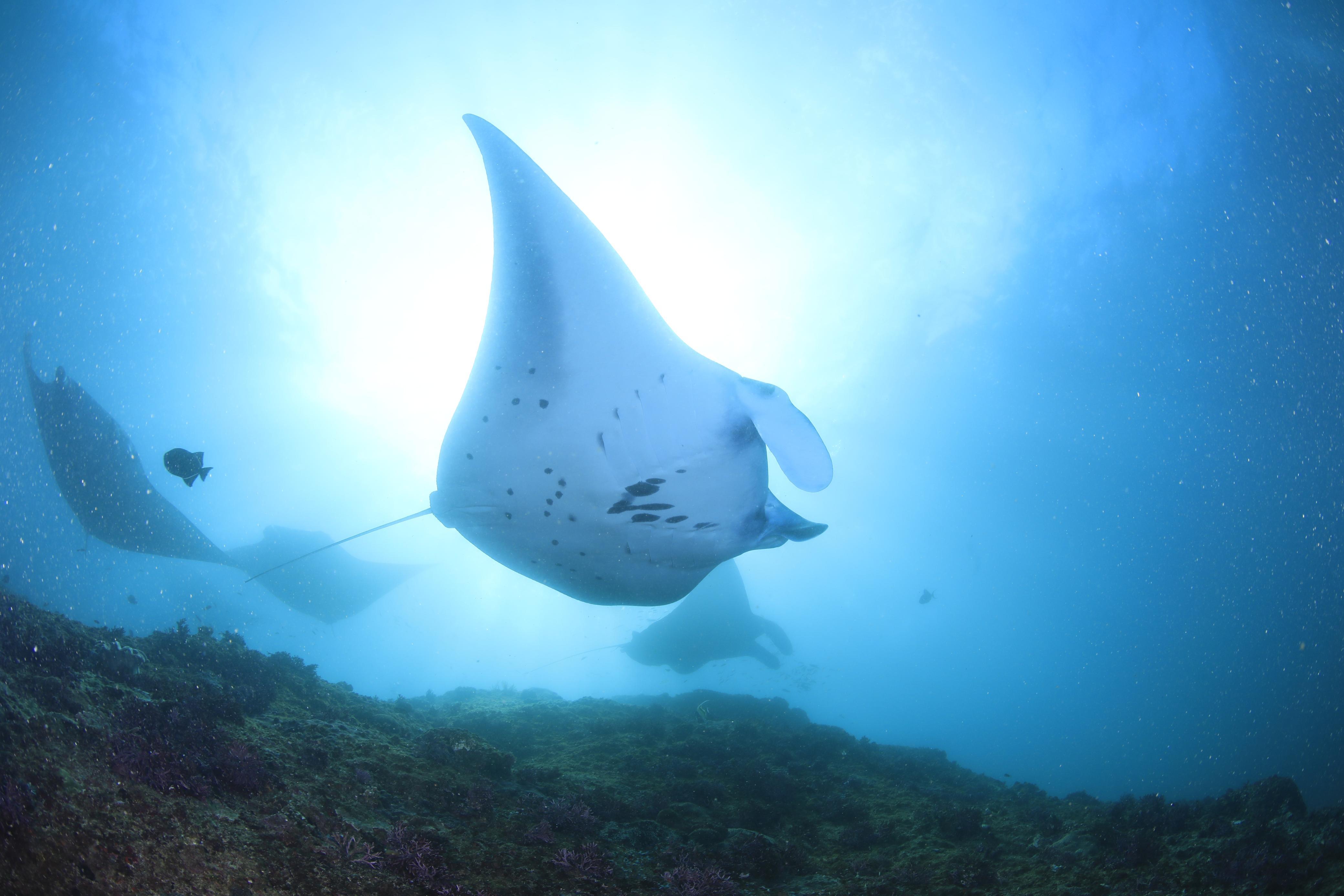
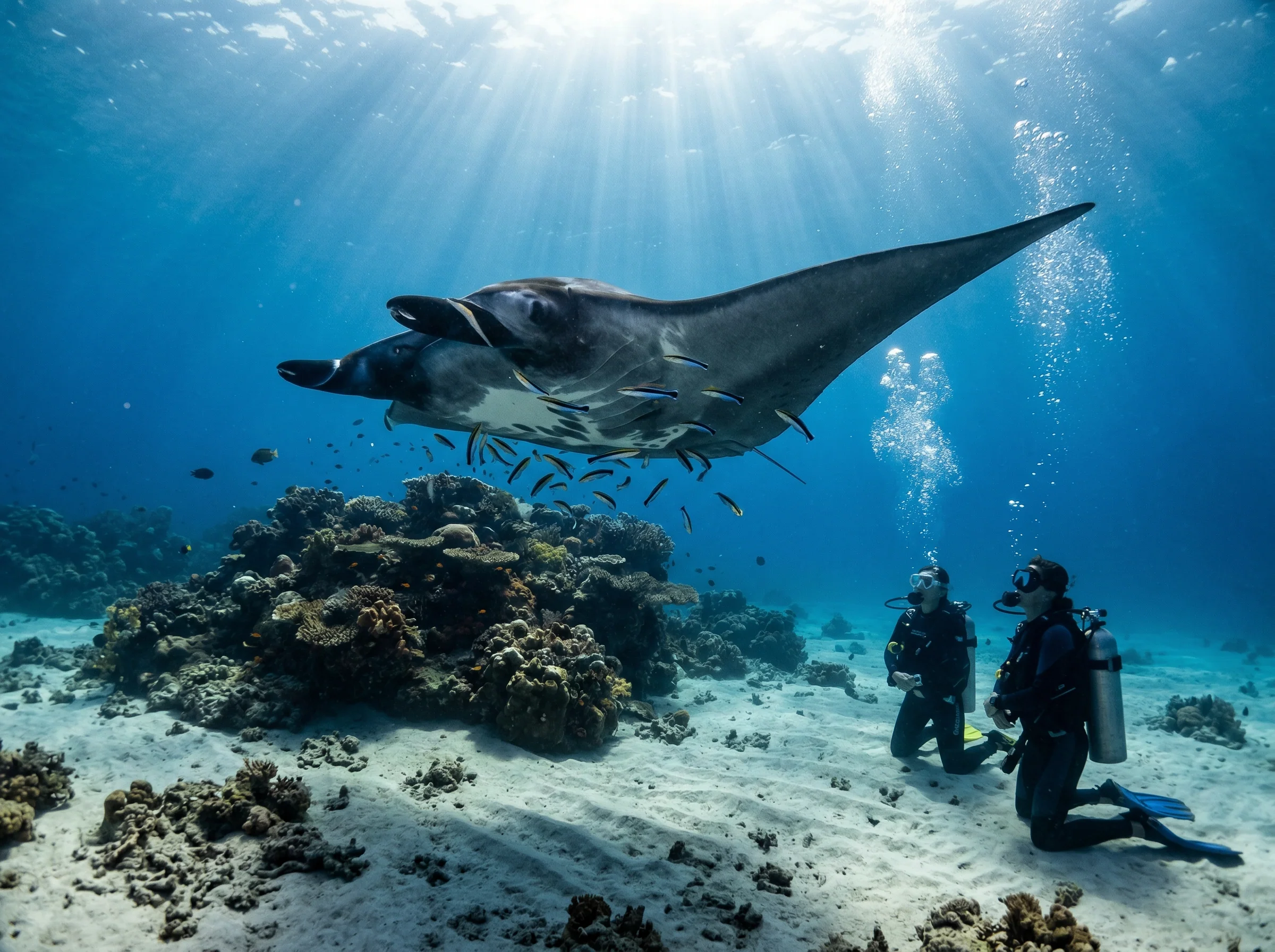
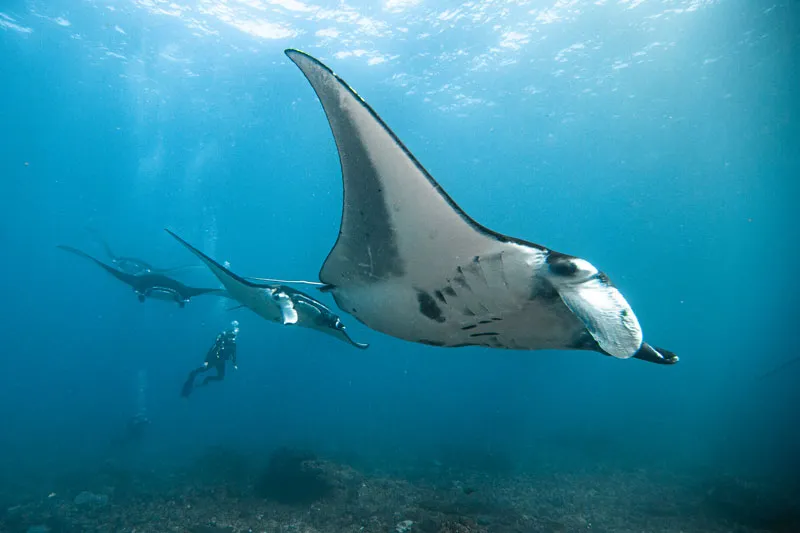
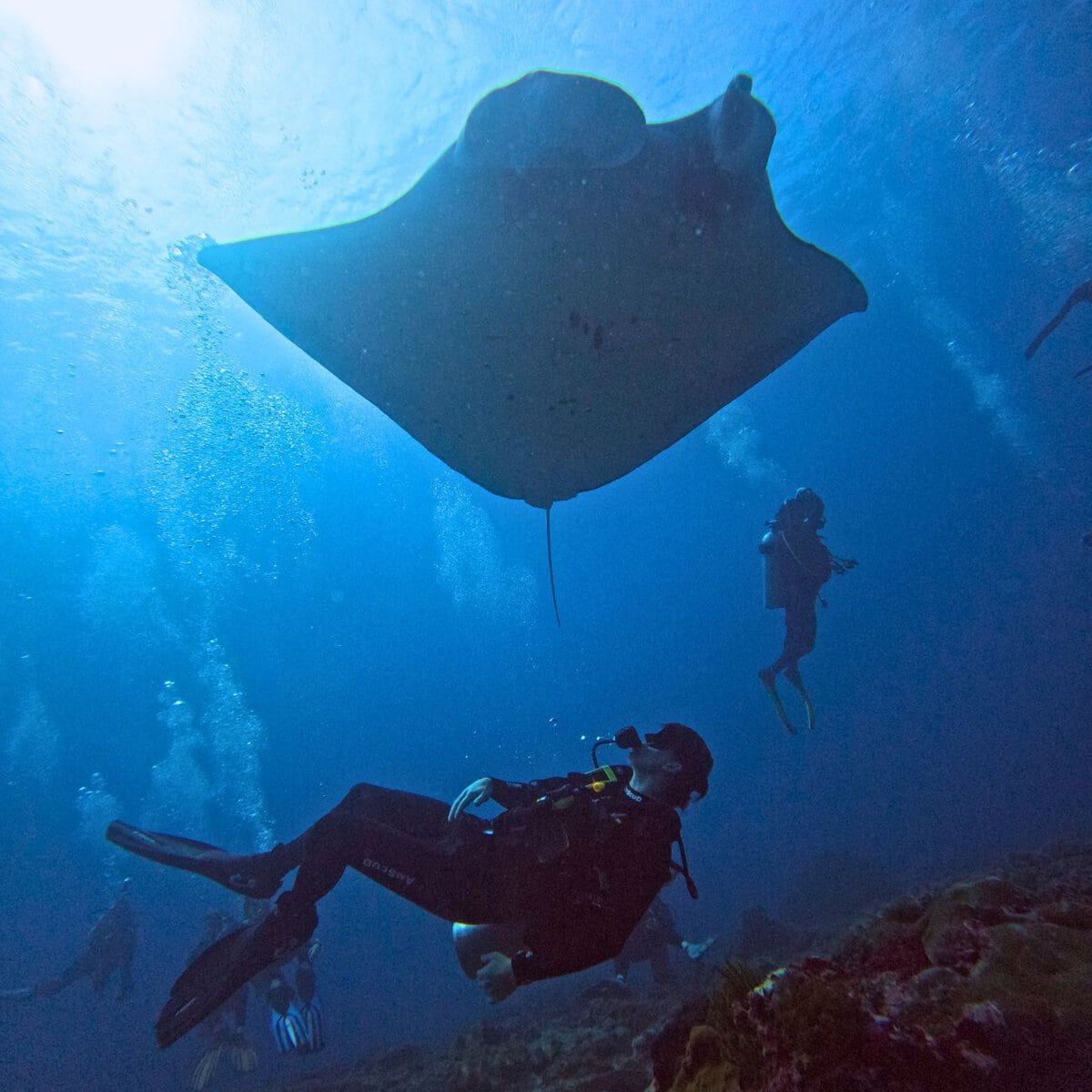
You giant-stride into bathwater-warm visibility, descend along the anchor line, and settle on coral rock at fourteen metres. Within two minutes a manta appears from the blue, three-metre wingspan, white chevrons on charcoal skin. It loops past your mask, gill slits flared, then returns to the cleaning station two body-lengths away. You watch it hover, motionless except for wingtip adjustments, while butterflyfish work its belly. A second manta joins, then a third. Your air lasts forty minutes; the mantas stay longer. Between encounters you scan the reef wall for moray eels coiled in crevices and lionfish drifting above staghorn thickets. At eight metres you pause for a safety stop, looking up to see snorkelers finning overhead, their legs silhouetted against the hull shadows of a dozen boats.
All the details about your upcoming adventure in one place
Manta Point sits at the southwestern tip of Nusa Penida, where Indian Ocean swells meet a submerged limestone shelf and nutrient-rich upwellings draw reef manta rays year-round to feed and be cleaned by butterflyfish and wrasse.
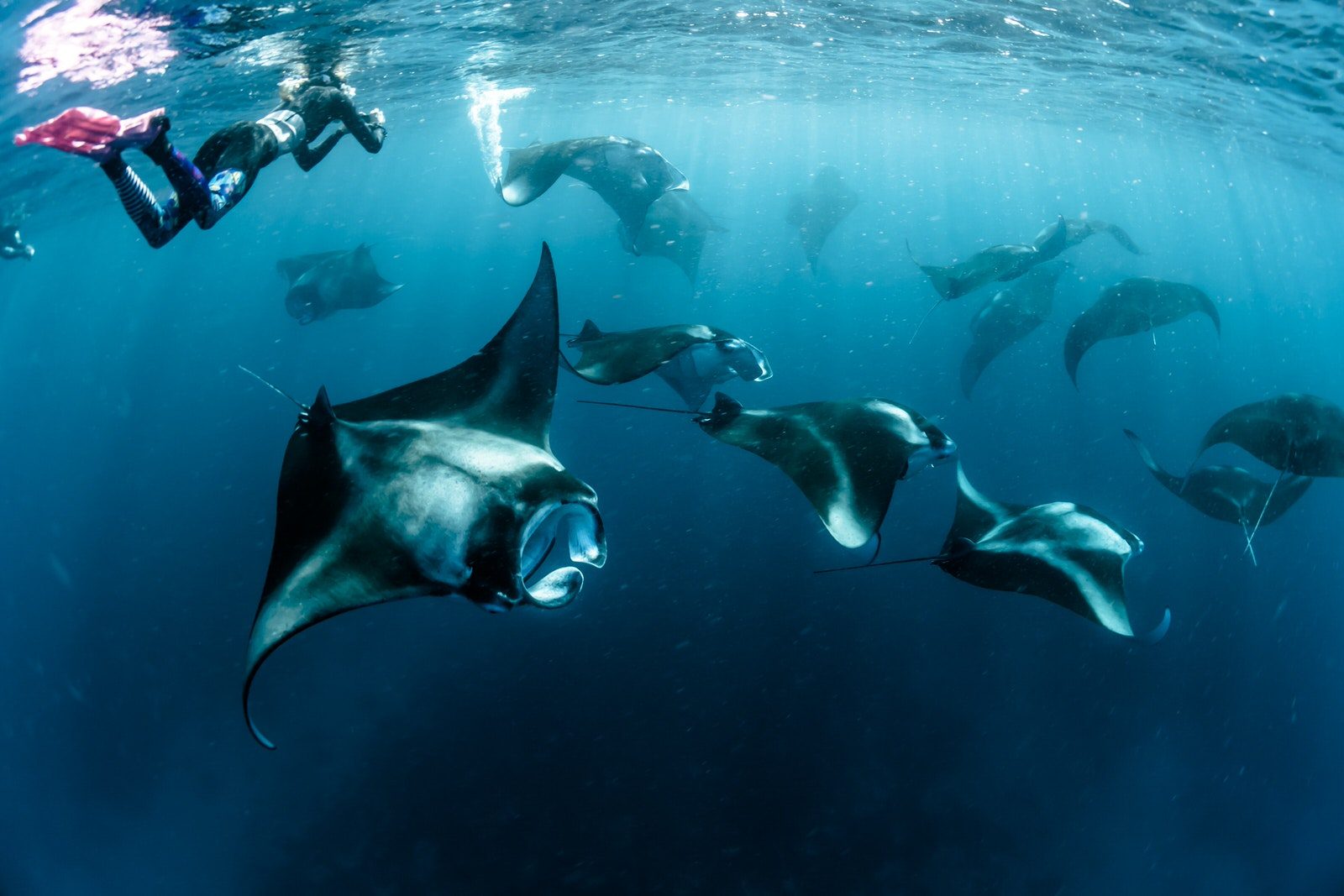
The site was documented by recreational divers in the early 2000s, but local fishermen had long observed the seasonal congregation of pari hantu — ghost rays — long before tourism arrived. By 2012, Nusa Penida's waters were declared a Marine Protected Area, banning manta fishing across 20,235 hectares and transforming what had been subsistence fishing grounds into one of Indonesia's most reliable manta encounters.
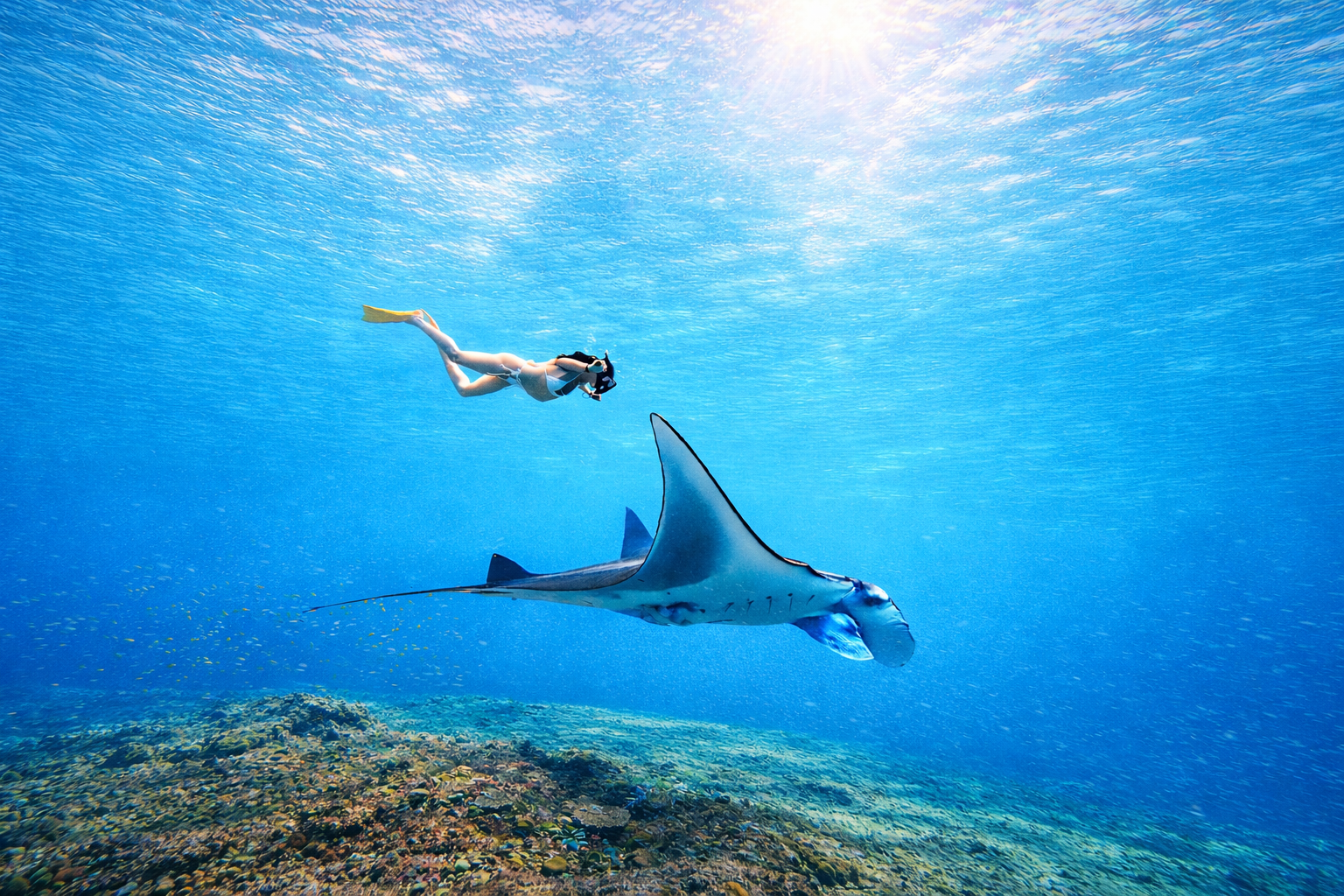
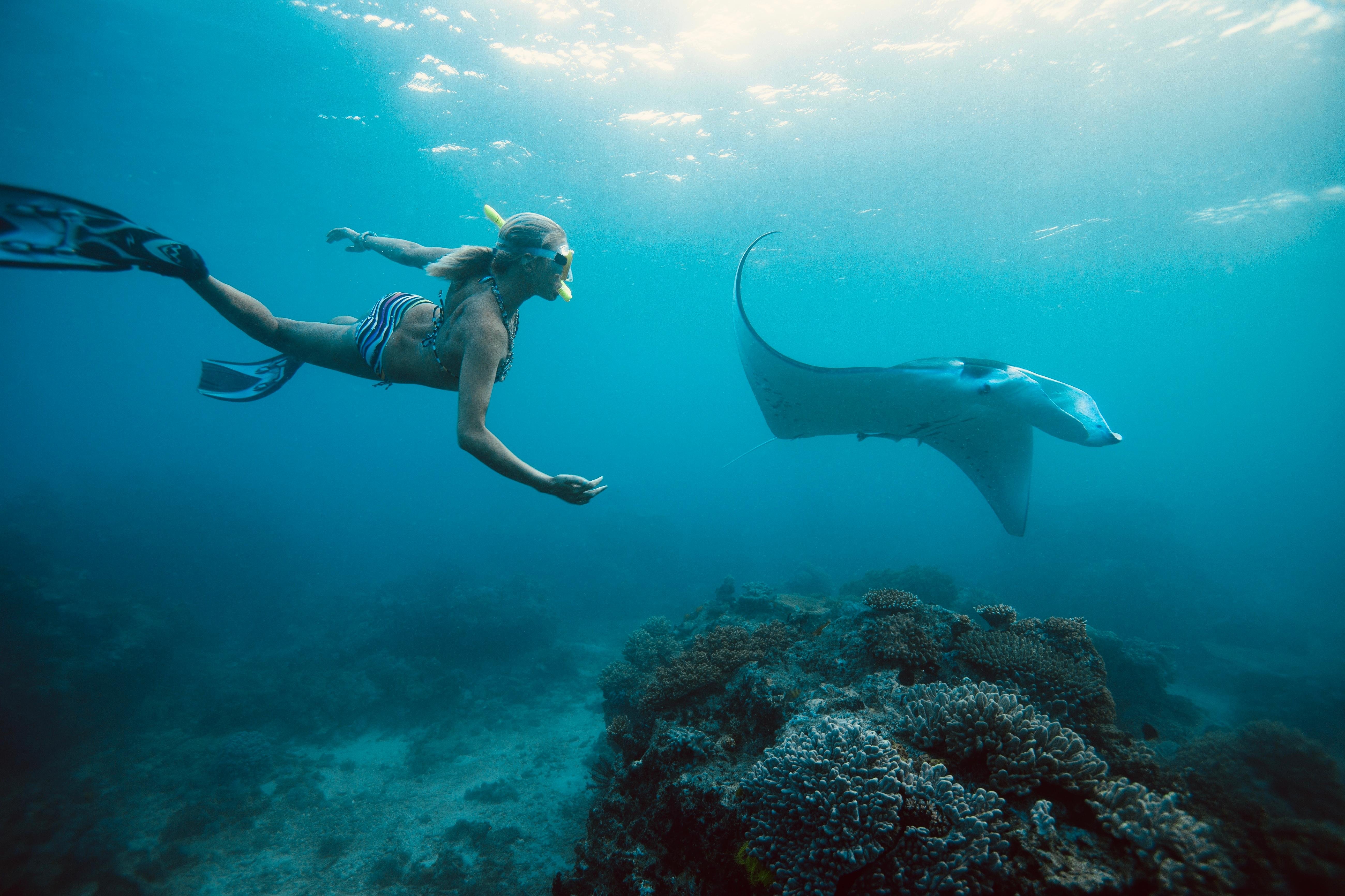
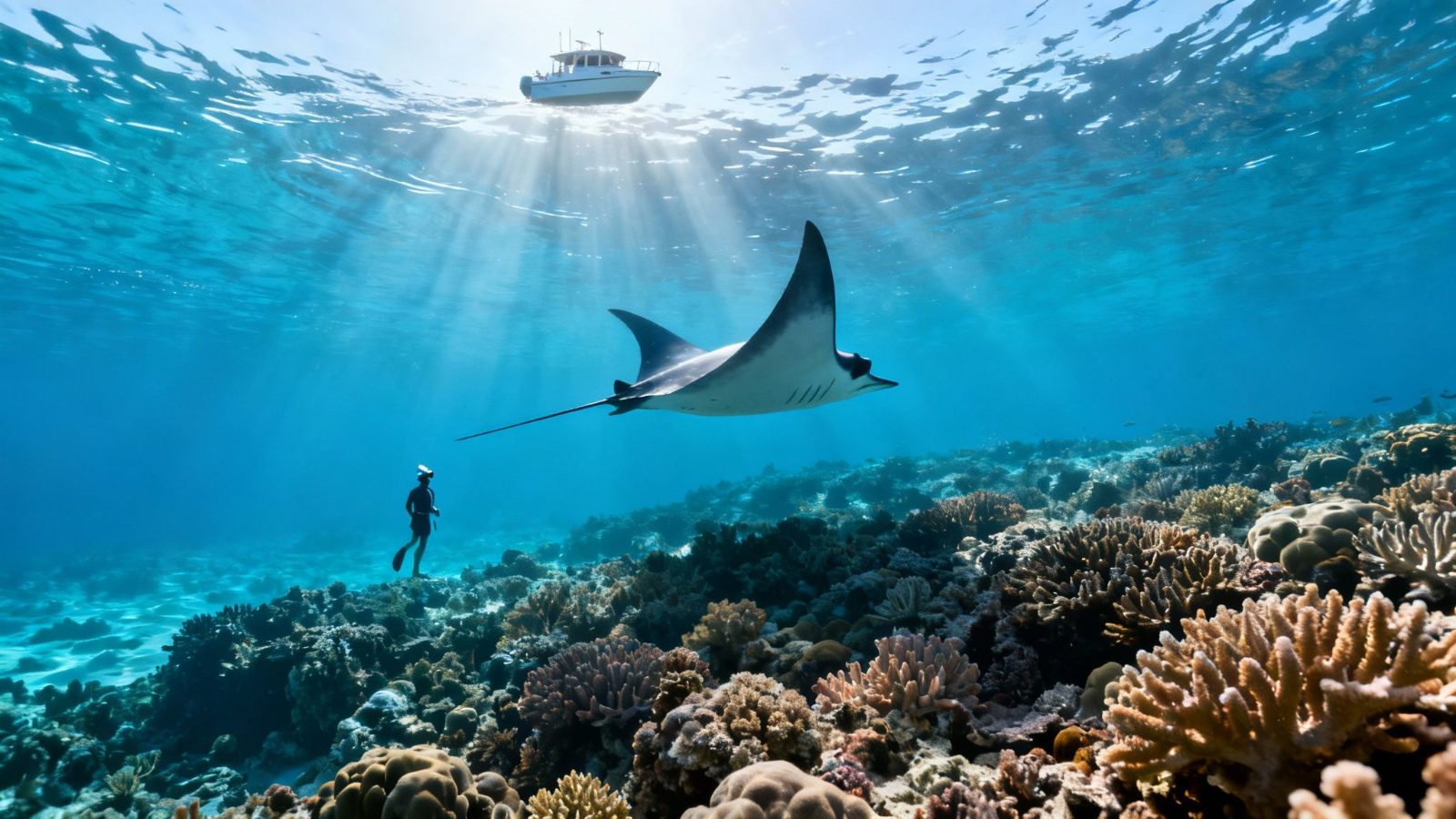
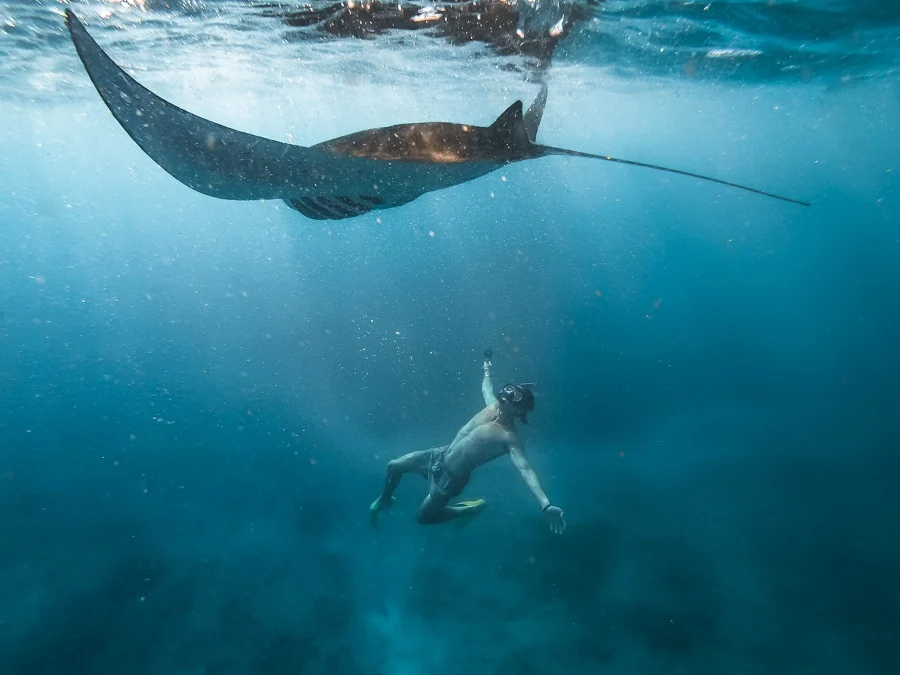
Diving Manta Point Nusa Penida differs fundamentally from snorkeling the same site. Surface observers watch mantas glide beneath them at three to five metres, silhouettes against sand. Scuba divers descend to twelve or fifteen metres, kneeling on rock to watch mantas approach cleaning stations where parasites are picked from gill slits and belly folds. The choreography is unhurried: a manta banks, exposes its ventral surface, hovers while cleaner fish dart across white belly patches. Divers with advanced buoyancy control can hold position in mild current without disturbing the cleaning dance. The reef slopes from eight metres to beyond sport-diving limits, its wall pocked with soft coral and gorgonians. Visibility ranges from ten to thirty metres depending on plankton density; green water signals abundant food and more manta activity.
Nusa penida scuba diving tours typically bundle Manta Point with a second drift dive at Crystal Bay or Gamat Bay, where stronger currents demand confident finning and compass navigation. Most operators run morning departures between seven and eight, when wind is calm and the manta aggregation peaks before mid-morning swell builds. The 100,000 IDR marine conservation fee applies to all visitors entering the protected zone, whether snorkeling or diving. That revenue funds ranger patrols and mooring-buoy maintenance, keeping anchors off the reef. Dive briefings stress no-touch protocol: mantas are curious but skittish, and a single diver reaching out can scatter the group for twenty minutes. The site's fame has made it Bali's busiest manta dive, with ten to fifteen boats anchored on peak mornings, but the reef is large enough that crowding dissipates underwater.

Divers with advanced buoyancy control can hold position in mild current without disturbing the cleaning dance.
Divers should wear appropriate swimwear under a rash guard or light wetsuit. The water at diving manta point nusa penida can be cooler due to deep-sea currents, so thermal protection is advised.
Secure your belongings in dry bags during your diving manta point nusa penida tour. Most boat operators provide limited storage, so minimize items taken on board.
Underwater photography is permitted at diving manta point nusa penida, but maintain a respectful distance from rays. Avoid using flash directly at the animals to ensure a better experience for your diving manta point nusa penida tickets session.
The minimum age for scuba activities is typically 10 years old. Families planning a diving manta point nusa penida tour should check specific operator age requirements for junior divers.
Access to diving manta point nusa penida requires boarding a boat from a harbor. The site involves open-water swimming and may not be suitable for those with limited mobility or severe seasickness.
Most diving manta point nusa penida tours include water and light snacks on board. Full meals are usually provided after the final dive at local harbor facilities.
Opening hours
07:00–19:00
Address
Manta Point, Nusa Penida, Klungkung Regency, Bali, Indonesia
Accessibility
Boat-accessible site with varying swell
Best arrival window
07:00–09:00
Contact
+62 822 6081 5922
Official site
https://mantapointnusapenida.com
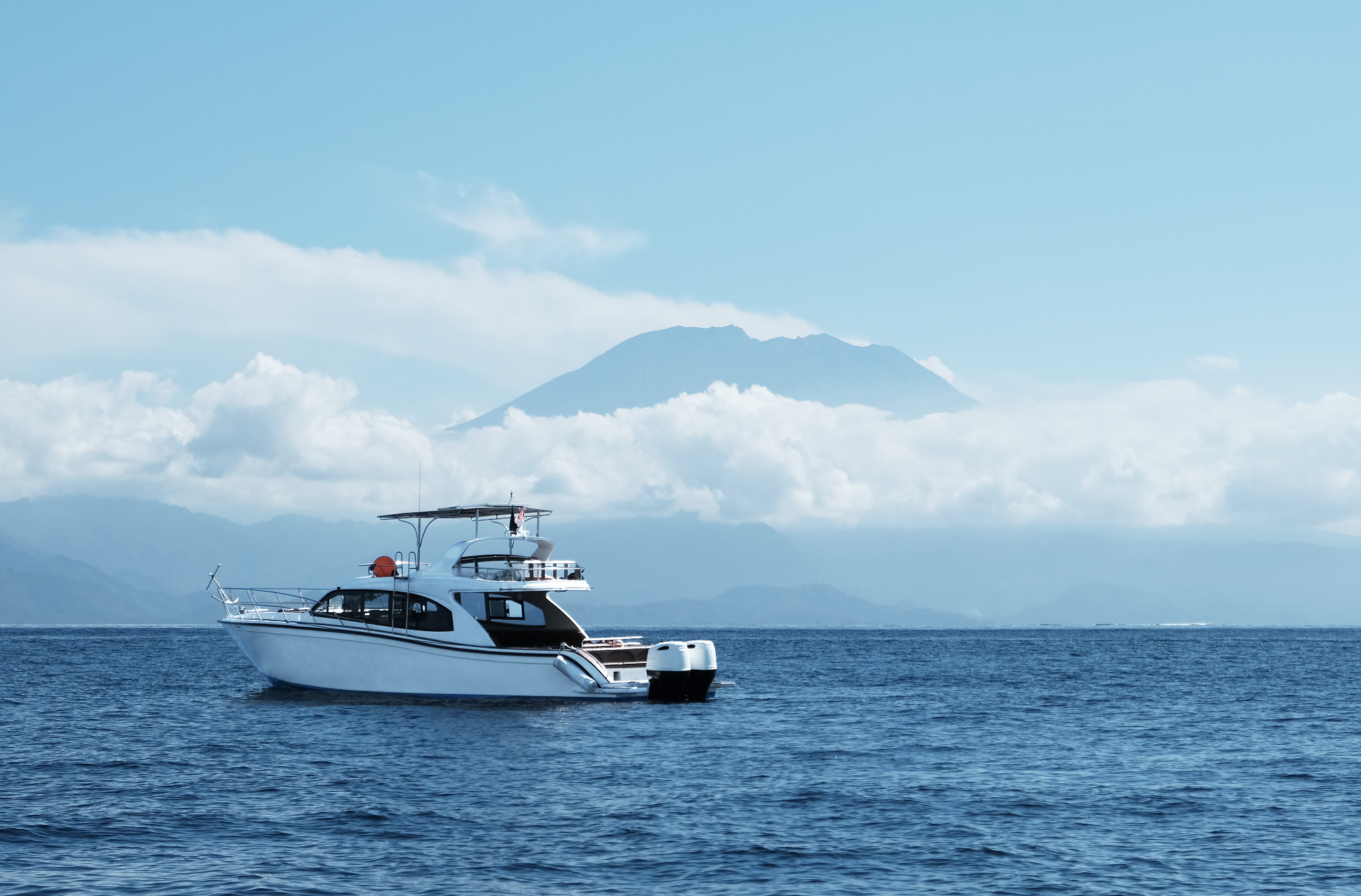
Boat · Taxi · Private drivers provide transport to harbor meeting points in Sanur.
Fast boats depart daily from Sanur Harbor for diving manta point nusa penida tours.
Full refunds are typically provided for cancellations made at least 24 hours before the scheduled departure time. This policy excludes the 100,000 IDR Marine Protected Area permit fee per person required for diving manta point nusa penida.
Recommended time
Half a day
For those engaging in diving manta point nusa penida, allocating a half-day ensures sufficient time for briefing and equipment setup. Scuba enthusiasts should prioritize early departures, as the maritime conditions and swell intensity often increase as the day progresses. When considering diving manta point nusa penida tours, remember that underwater visibility is typically superior before midday crowds arrive at the cleaning station. Booking your diving manta point nusa penida tickets in advance helps streamline the boarding process for your marine encounter.
Crowd levels through the day
Weather · crowds · average price — dots go green to amber to red as each metric rises.
Excellent visibility and pleasant temperatures for diving manta point nusa penida.
Always verify weather and sea swell with your operator before heading to diving manta point nusa penida.
Jl. Hang Tuah, Sanur
Main departure hub for most diving manta point nusa penida tours
Get directionsManta Point emerged as a dive site in the late 1980s when European scuba operators exploring Nusa Penida's southern coast discovered a cleaning station where reef manta rays congregated year-round. The channel between Nusa Penida and the smaller Nusa Ceningan creates nutrient-rich upwellings that attract plankton, and mantas gather at shallow coral bommies where cleaner wrasse remove parasites from their skin. Early diving manta point nusa penida expeditions required live-aboard vessels due to the absence of island infrastructure, and strong currents limited access to experienced technical divers. The site gained international recognition in 1995 after marine biologist Dr Andrea Marshall published field observations identifying the channel as one of Southeast Asia's most reliable manta aggregation zones. Her research documented individual mantas returning to the same cleaning stations across multiple seasons, establishing the site's importance for long-term photo-identification studies. By 2000, day-trip operators from mainland Bali began running advanced open-water courses at Manta Point, though unpredictable down-currents and seasonal swells continued to challenge less experienced divers. The 2012 establishment of the Nusa Penida Marine Protected Area formalized conservation protocols and introduced the 100,000 IDR permit system to fund reef monitoring. Dive briefings now mandate negative entries to avoid surface turbulence and require divers to maintain neutral buoyancy at least two meters from mantas. The MPA designation coincided with a surge in diving manta point nusa penida tours, creating tension between commercial operators and researchers concerned about behavioral disruption. A 2018 code-of-conduct agreement limited group sizes to twelve divers per site and banned flash photography within the cleaning station perimeter. Today the site hosts approximately thirty documented resident mantas, with peak sightings between April and November when plankton blooms intensify. Scuba access remains weather-dependent, with the bay's exposure to southern swells frequently closing the site to all but technical divers during the December-to-March monsoon.
European dive operators discover manta cleaning stations in the channel south of Nusa Penida.
Dr Andrea Marshall publishes field research confirming year-round manta aggregation patterns at the site.
Day-trip scuba operators from Bali begin regular advanced open-water excursions to Manta Point.
Nusa Penida Marine Protected Area established, introducing permit fees and dive-conduct regulations.
Operator coalition adopts group-size limits and no-flash protocols to reduce manta behavioral disruption.
Photo-identification database catalogs thirty resident mantas, with peak sightings April through November.
Position yourself near the main coral outcrop where rays often hover for parasites to be removed. This zone provides high contrast for macro or wide-angle lens capture when diving manta point nusa penida.
Float at a neutral buoyancy level over the sandy patches to capture the silhouette of mantas gliding above against the surface light. This is a common setup for those on diving manta point nusa penida tours to photograph the creatures from below.
Navigate along the limestone wall where depth drops off, often where larger mantas congregate before heading into deeper water. This area is ideal for capturing the scale of the marine life when purchasing diving manta point nusa penida tickets.
Stay near the entry point of the dive site where the current is often manageable, allowing for stable shots of mantas circling in the nutrient-rich water. This location is popular for a diving manta point nusa penida tour group looking for consistent visibility.
Planning a family excursion for diving manta point nusa penida requires careful preparation to ensure safety and comfort for younger guests. While this location offers remarkable underwater encounters, it is primarily suited for experienced junior divers rather than toddlers or young children.
There are no baby-change stations or onshore amenities available at the remote Manta Point, so ensure all necessities are packed on your boat.
Families interested in diving manta point nusa penida tours should confirm that all minors meet the minimum PADI or SSI certification requirements for open-ocean conditions.
To maximize your chances of success, prioritize diving manta point nusa penida tickets during the morning hours, as this is when the swell is typically manageable for junior divers.
Ensure your children have correctly fitted wetsuits, as the thermocline can drop temperatures significantly; this is vital for comfort during any professional diving manta point nusa penida tour.
Since this site is accessible only by boat, ensure your family is comfortable with open-water travel before booking; the Marine Protected Area permit fee of 100,000 IDR per person is required for everyone entering the water.
Since Manta Point is a remote maritime location, there are no dining facilities directly on-site; visitors planning on diving manta point nusa penida should coordinate meals with their boat operators. Most diving manta point nusa penida tours include refreshments, though it is standard to bring extra water and snacks for your diving manta point nusa penida tickets session.
$5-10
Everything you need to know for your journey
The site is accessible daily from 07:00–19:00.
Yes, a 100,000 IDR Marine Protected Area permit fee per person is required for diving manta point nusa penida.
The site is generally suitable for open water divers, though conditions at diving manta point nusa penida vary.
Bring swimwear, a towel, reef-safe sunscreen, and your diving certification for your diving manta point nusa penida tour.
Most operators allow cancellations up to 24 hours before your diving manta point nusa penida tour for a full refund, excluding the permit fee.
Access is via boat from ports like Sanur to the southern coast of Nusa Penida for diving manta point nusa penida.
Yes, manta rays frequent the cleaning stations at diving manta point nusa penida year-round.
Many tours combine diving manta point nusa penida with sites like Crystal Bay.
Arrive between 07:00–09:00 to ensure calmer water conditions for your diving manta point nusa penida session.
While sightings are highly reliable, most operators offer a free return or site diversion if no rays are seen during your diving manta point nusa penida trip.
Known for clear water and potential green turtle sightings.
Wide selection of hotels near harbor departure points.
Join thousands of happy travelers who have discovered this incredible experience
Book Your Experience Now